
How it works
You talk. It listens. Then it writes the book.
Short conversations by voice, whenever you like. A listener that asks what a good listener would and never forgets a word. Then a real book, written in your words, that your family will keep.
Four steps
From the first hello to the book on the shelf.

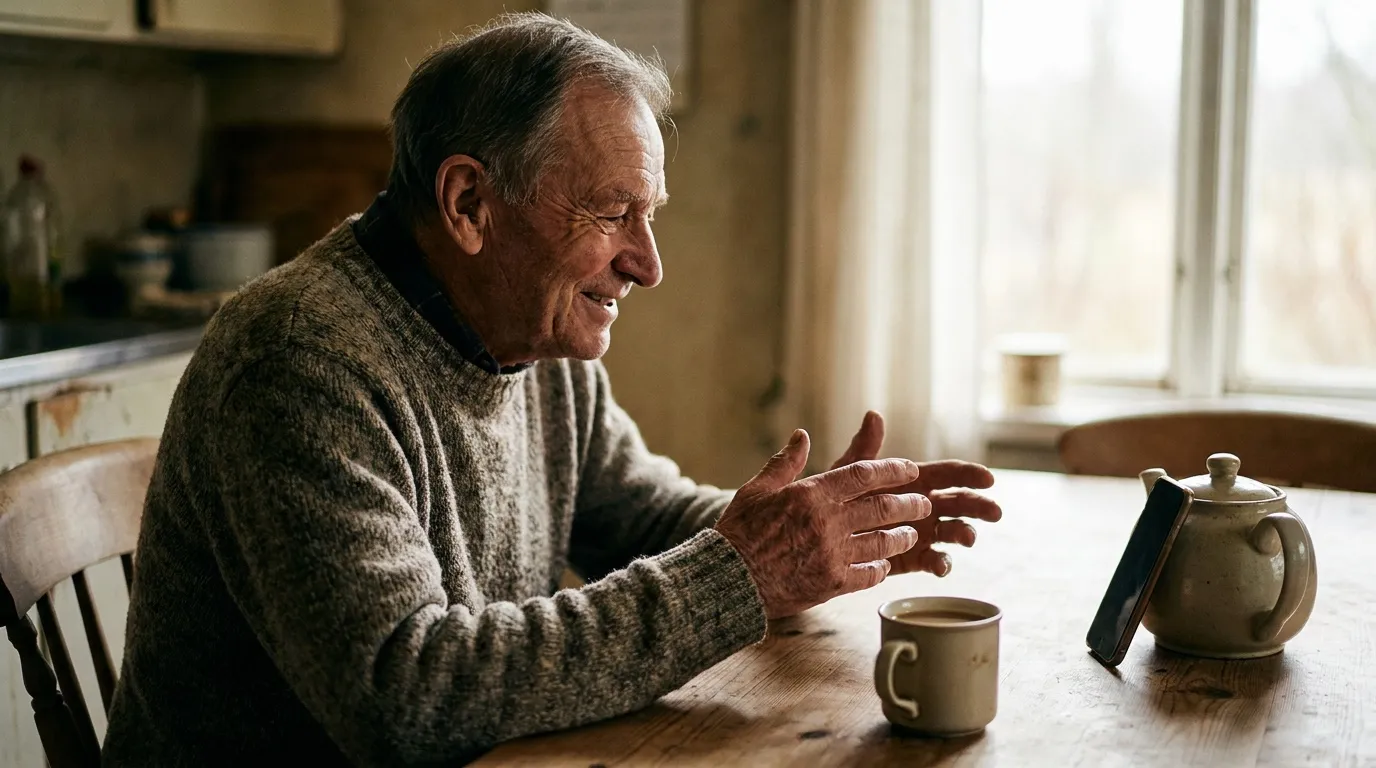
You start, or someone starts it for you.
Pay once and begin the same day. If a son or daughter sets it up, they record a short message in their own voice and you hear it at your first visit.
You talk. Someone listens.
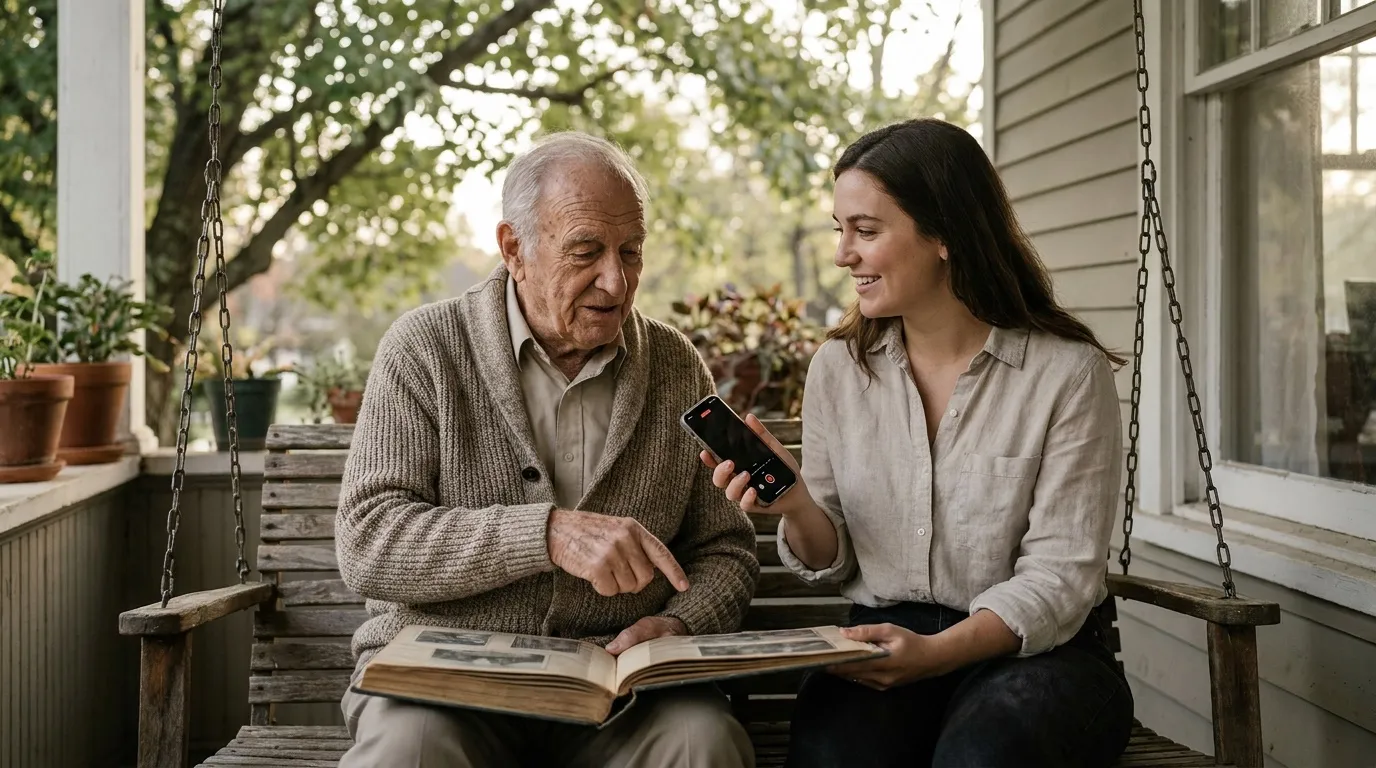
Fifteen minutes at a time, by voice, in the app, whenever you like. One question, your whole answer, then the follow-up a good listener would ask.
The book takes shape.
Everything you say is kept in one place: the people, the places, the sayings, the stories. You and your family watch the chapters fill in.
It is written, read and printed.
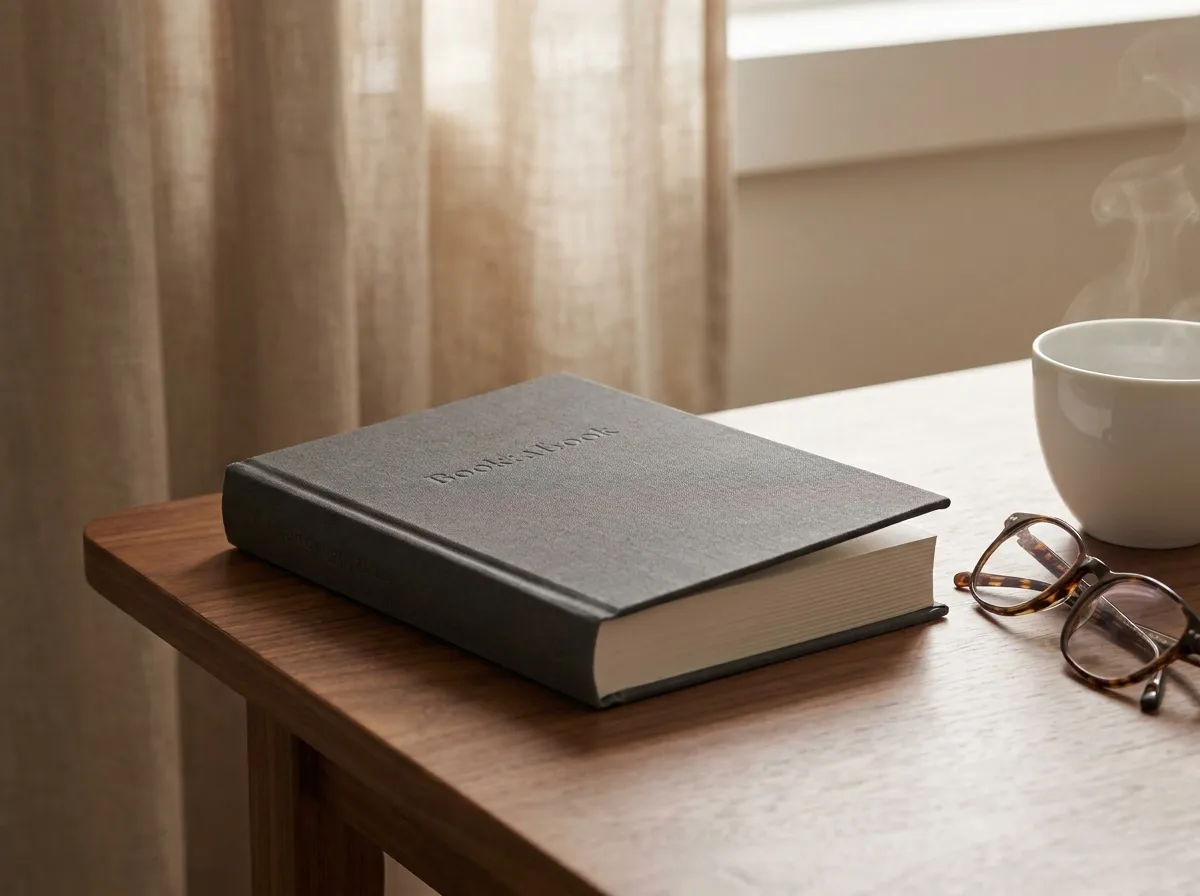
The shape of the book is worked out first, then it is written in your words. You read a proof, change what you like, and it is printed as a hardcover.
What did the paper smell like in that kitchen? Who else was listening?
Take your time. I'm listening.
A visit
Fifteen minutes. One question at a time.
You open the app and press the big button. The listener says hello, reminds you where you left off, and asks one question. You answer for as long as you like. There is no wrong answer and no right length.
- Six to eight questions in a visitThen it stops, even if you are enjoying yourself. Tomorrow is another day.
- Easy first, tender lastThe hard subjects are never the first question. Some are never asked at all unless you raise them.
- Stop whenever you likeFive minutes counts. Say "that's enough for today" and it is.
The listener
It asks the second question. That is where the stories are.
Anyone can ask "what was your childhood like?" A good listener asks who else was in the room, what she said exactly, and what happened the next morning. The listener in the app is called Wren. It is patient, it is curious, and it remembers everything you have ever told it.
The record
Everything you say is kept, and kept in order.
Behind every visit is one record of your life. It is how the listener knows what to ask next, and it is what the book is written from.
The people
Everyone you mention, with what you said about them. The listener notices who is still only a name and asks about them.
The places
Every house, street, school and workplace, with the years you were there.
The sayings
The phrases your family repeats. "Waste not, want not." They end up in the book exactly as said.
The stories
Each story with its beginning and end. A story that stopped halfway gets a gentle question at a later visit.
The years
A timeline that fills in as you talk, so the gaps are easy to see, and to leave alone if you would rather.
The private things
Anything you seal stays sealed: for one person, for a date, or for after you are gone.
The writing
The book is designed before a word is written.
When the record holds what a writer needs, the book gets its shape: where it begins, what the chapters are, which story it turns on. Then it is written, in one of two ways.
The memoir
Written only from what you said · Your own voice, first person · Hearsay marked as hearsay
From the memoir
I used to read the paper to my father at the table, the racing results too, because his eyes had gone. I was six. My mother would say, the professor is in session, and nobody was allowed to talk.
I did not know half the words. I read them anyway, and he never once corrected me. I think now that he knew most of it already. He just liked to hear me.
The historical novel
Built on the true facts · Scenes and dialogue · A list at the back of what was imagined
From the novel
The kitchen smelled of coal and wet wool. Eleanor climbed onto the chair with the newspaper spread wider than her arms, and her father turned his good ear toward her.
"The two-thirty at Kempton," he said. She found it with her finger. "Silver Lady. Seven to two." He nodded as though she had told him something important. Across the room her mother dried a plate and said, to nobody, "The professor is in session."
At the back of the book: the smell of the kitchen and the name of the horse were imagined. The reading, the racing results and her mother's words are as Eleanor told them.
Example passages written for this page from one sample story. See every kind of book, including the young adult edition and the children's picture book.
The proof, then the print
Nothing is printed until you say so.
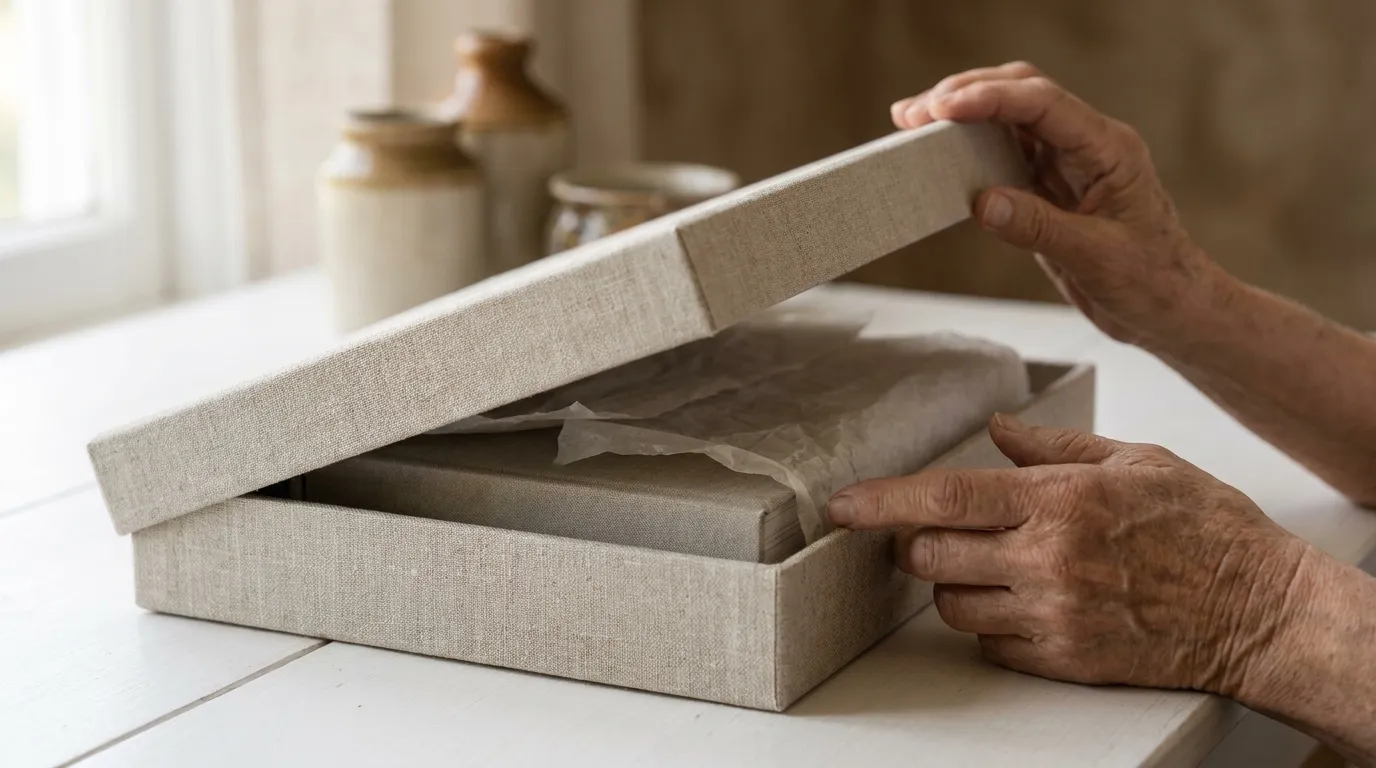
You and the family you choose read a proof. Mark what is wrong, what is missing and what should come out. When you approve it, it is printed as a sewn, cloth-bound hardcover in a gift box.
- Sealed stories stay sealed, even in the proof
- Your photographs placed next to the stories they belong to
- Every recording and transcript yours to download, free, forever
How you talk to it
The app is all you need.
In the app, by voice
The standard way. Open the app on a phone or tablet and talk. Nothing to type and no password to remember.
A reminder by text
A short text message tells you when a visit is waiting. Texts only remind. You always answer in the app.
A real phone call
For people who would rather not use an app: a call at a time you choose, on any phone, including a landline.
Our rules
You are in charge of every word.
You decide what is asked
Tell the listener a subject is off limits and it is never raised again.
You decide who reads it
Invite who you like. Seal any story for one person or a date. Change your mind any time.
No deadline, no renewal
Nothing expires. The record stays open until the book is finished, and we step in early if it stalls.
It is yours
Every recording, transcript and book belongs to the person who told it. Download it all, free, at any time.
No pressure, ever
No countdowns, no streaks, no guilt. If a week goes by, the next visit simply picks up where you left off.
Honest about what is true
The memoir uses only what you said. The novel lists, at the back, everything that was imagined.
Questions
What people ask first.
What is this, in one sentence?
You tell your life story by voice, a few minutes at a time, to a listener that asks good follow-up questions and remembers everything, and Tellforth writes it as a real book your family will read.
Is it really a book, or a pile of answers?
A real book. Tellforth works out the shape of the book before writing a word: where it starts, the chapters, the people who matter. The memoir uses only what you said, in your words. The novel builds a story on the true facts and lists what was imagined at the back.
Who is it for?
Anyone with a story. Most often a parent or grandparent telling their life for the family, but also people facing an illness, people writing their own memoir, founders, veterans, and parents keeping a child's own made-up stories.
How long does it take?
As long as you like. There is no deadline. A visit is about fifteen minutes and most people do two or three a week at most. The book is written once the record holds what a writer needs, and you can watch the chapters fill in as you go.
Who is doing the asking?
An interviewer in the app, named Wren. It asks one question at a time, listens to the whole answer, and asks the next question a good listener would. It never rushes you and never asks the hard questions first.
Do I need to be good with technology?
No. You open the app and talk, that is all. Nothing to type and no password to remember. A text message reminds you when a visit is waiting. If you would rather not use an app at all, phone-call visits on any phone are available as a premium add-on.
I am not well. Can I still do this?
Yes, and at your own pace. Five minutes is a visit. There is no deadline and nothing to keep up with. You decide what is asked, what is kept private, and who reads what. If you would rather stop, you stop.
What if I do not remember things well?
That is normal and it is fine. The listener asks about things you can see, smell and hold, which is how memory works best, and never tests you. A story told twice in two ways is kept both ways.
Tellforth
Your first visit takes fifteen minutes.
Start today, or give it to someone whose stories you want to keep.
Updated · Plain-text version of this page: /how-it-works.md